
 Celebrating Women Scientists Transforming Maternal Health
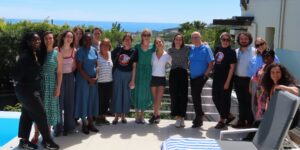
Across continents, women scientists are driving a quiet revolution in maternal health. Their work is reshaping care for mothers and babies, bringing evidence-based innovations to communities that need them most. At the heart of this movement is CRIBS Global, an international consortium led by Kings College London, powered predominantly by women in academia, working across Africa (Zambia, Sierra Leone, South Africa), India, Brazil, and beyond. These initiatives embody the spirit of research for women, by women. The consortium has attracted funding from numerous sources, including Gates Foundation, the UK Medical Research Council, FCDO, NIHR and other charities. More than 30 high- impact papers have been recently generated.
Papagaio

Coordinated by Dr Alice Hurrell, a lecturer in obstetrics, Papagaio builds on the success of the Cradle device and Cradle Vital Signs Alert system, which transformed emergency care in low-resource settings. Today, the Papagaio Diagnosis Trial is refining diagnosis and management of pre-eclampsia through affordable point-of-care testing for PlGF (placental growth factor). Spanning four continents and involving over 2400 women, the trial has already trained 70 research staff and 700 clinicians — a testament to resilience and collaboration.
PrAKI
 Led by Dr Katherine Clark, an academic midwife, PrAKI tackles the overlooked threat of pregnancy-related acute kidney injury. With sites across more than a dozen countries — from Zambia and Kenya to Indonesia, Mexico, and Ireland — the programme is building evidence and awareness to improve prevention, identification, and management of PrAKI. By uniting researchers and clinicians worldwide, PrAKI is shining a light on a neglected condition and empowering health systems to act earlier.
CRADLE‑B
 Led by Dr Kate Bramham, a reader in renal medicine, CRADLE‑B is pioneering community-based postnatal interventions for women with hypertensive disorders of pregnancy. Operating in Sierra Leone, Zambia, and South Africa, the programme aims to facilitate earlier detection, improve hypertension management, and prevent long-term organ damage. By focusing on lifelong health benefits, CRADLE‑B ensures that maternal care extends beyond childbirth into sustained wellbeing.
CRADLE SMART
 Led by Dr Kate Bramham and co-ordinated by Dr Alex Ridout, lecturer in maternal and fetal health, CRADLE SMART (Community empoweRment Approaches to Develop Local, Early Sustainable MAteRnity care with co‑developed Technology) strengthens early, community-centred maternal and perinatal care, making the first contact in pregnancy count. By shifting risk identification earlier and closer to communities, it supports respectful care from the outset and moves maternal health from late, reactive intervention to early, preventative action.
Papaya
 Led by Dr Alex Ridout, Papaya is a pregnancy screening programme in Sierra Leone. It is developing educational materials and evaluating community engagement to increase early antenatal care uptake before 16 weeks. By combining blood pressure, maternal factors, and point-of-care biomarkers such as GlyFn and PlGF, Papaya is exploring innovative, contextually appropriate screening tools — including AI-enhanced ultrasound — to improve pre-eclampsia detection.
CARES Study
 Led by Dr Candace Beoku-Betts, a PhD candidate, the CARES study (Cardiometabolic Adolescent REproductive health in Sierra Leone) investigates the unique cardiovascular and metabolic mechanisms behind pre-eclampsia in adolescents. By focusing on young mothers in low-resource contexts, CARES is filling a critical gap in global understanding and has the potential to reshape strategies for reducing maternal mortality worldwide.
CRADLE 5
CRADLE 5, coordinated by Dr Alex Ridout, evaluates the national scale up of the CRADLE Vital Signs Alert device across in Sierra Leone. Between May 23, 2022, and June 30, 2023, 2171 CRADLE devices were distributed to 643 government health facilities, and 2135 frontline workers were trained. National scale-up of the CRADLE intervention improved detection of maternal complications and referral practices but did not reduce overall adverse outcomes. The trial showed that large-scale adoption of CRADLE is feasible and identified barriers to facilitate an impact on maternal and perinatal mortality. CRADLE 5 demonstrates how simple, scalable interventions can save lives.
Apricot
 Led by Dr Katy Kuhrt, a PhD candidate, Apricot assessed point-of-care creatinine testing in pregnancy in Sierra Leone. With AKI linked to hypertensive disorders, haemorrhage, and sepsis, this feasibility study explored how rapid creatinine testing could improve diagnosis and management, reducing maternal and fetal mortality.
Pineapple
 Also led by Dr Katy Kuhrt, Pineapple examined point-of-care PlGF testing for early pre-eclampsia prediction. By enabling real-time results from capillary blood samples, this innovation supports midwifery-led pathways, reduces unnecessary interventions, and improves risk stratification in low-resource settings.
SIPHRE
Led by Dr Katy Kuhrt, SIPHRE (Shock Index in Pregnancy: Haemorrhage and sepsis Risk Evaluation) validated the shock index as an early predictor of poor outcomes in maternal haemorrhage and sepsis. This work underpins the CRADLE VSA device’s role in detecting deterioration early and preventing avoidable deaths.
CRADLE 2 & 3 Trials
- CRADLE 2 (Dr Hannah Nathan) evaluated the low-cost CRADLE VSA device for detecting life-threatening conditions earlier in low-resource settings.
- CRADLE 3 (Dr Nicola Vousden) tested the device and training package in routine maternity care, aiming to reduce maternal mortality and morbidity across LMICs.
CRADLE 4 Trial
Coordinated by Dr Alice Beardmore Gray, CRADLE 4 investigated early delivery versus expectant management for pre-eclampsia in LMICs, improving outcomes where neonatal intensive care resources are limited.
2YoungLives (2YL)
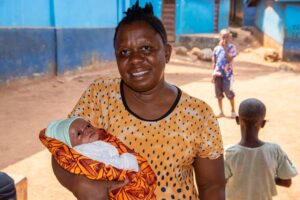 Developed by Dr Mangenda Kamara, Dr Cristina Fernandez-Turienzo and Professor Jane Sandall, 2YL is a mentoring programme for adolescent girls in Sierra Leone. By pairing young mothers with compassionate community mentors, it supports antenatal care, safe delivery, parenting, education, and empowerment. This initiative has significantly reduced maternal mortality and transformed teenage lives.
Building the pipeline of women scientists
The CRIBS Global initiatives also build the pipeline of women scientists, by supporting and supervising PhD’s being done across the projects. Current PhD students are Dr Louisa Samuels, Dr Chileshe Mabula-Bwalya and Dr Anna Martin.
A Celebration of Women’s Leadership
Together, these programmes show the breadth of CRIBS Global’s impact:
- Papagaio: innovation in diagnostics.
- PrAKI: global collaboration and advocacy.
- CRADLE‑B & SMART: community-centred interventions.
- Papaya, CARES, Apricot, Pineapple, SIPHRE: pioneering studies tackling overlooked risks.
- CRADLE Trials & 2YL: proven interventions saving lives and empowering communities.
Each is led or co-ordinated by women scientists, united by a vision of equity and compassion. This International Women’s Month, we celebrate their leadership, resilience, and impact. Their work proves that when women lead research for women, the results are transformative — saving lives, protecting futures, and empowering communities worldwide.