
 Preeclampsia is one of the leading causes of maternal death worldwide, yet in many settings, diagnosing it still depends on lab equipment and turnaround times that pregnant women and clinicians simply don’t have. A new point-of-care test aims to change that, and last week it took a significant step forward.
The Lepzi Ltd team spent an intensive week at St Thomas’ Hospital in London, working shoulder-to-shoulder with PAPAGAIO researchers and clinical partners as part of SPARK-PE (sFlt-1/PLGF Assay Rapid Kit for Pre-Eclampsia), a Gates Foundation-funded project developing a fingerstick test that could bring reliable preeclampsia screening to settings that currently have none.
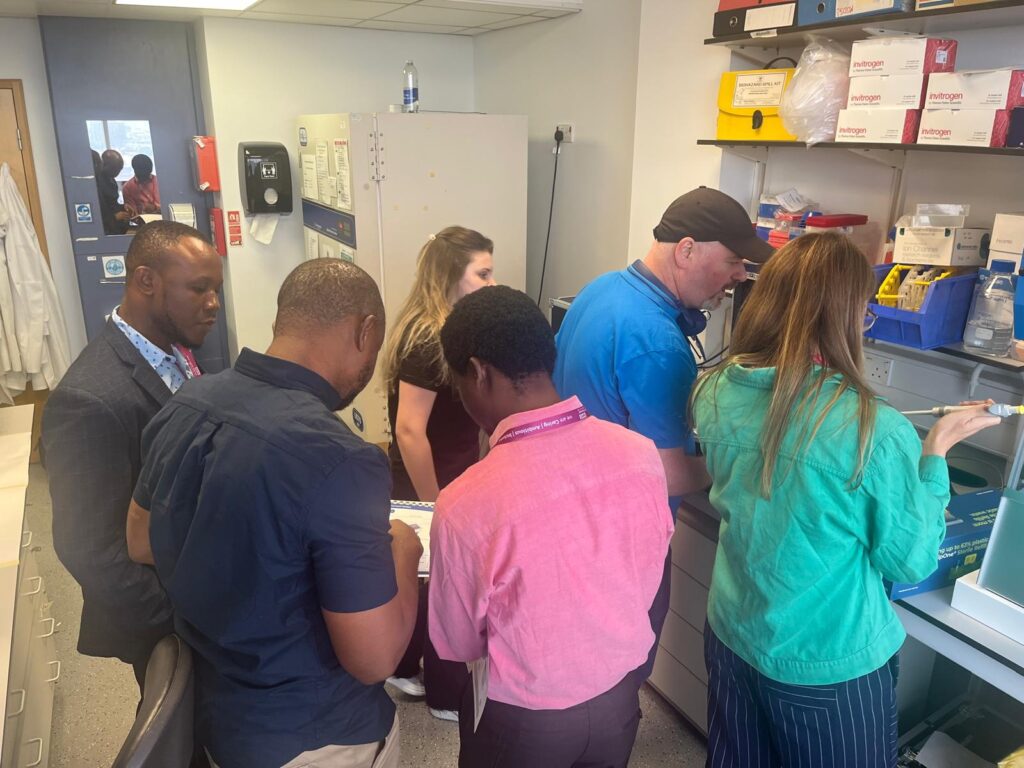 Using biobank samples, the teams ran pre-validation testing on the point-of-care sFlt-1/PLGF ratio test, gathering the data needed to guide the next stage of development and future clinical studies. It’s the kind of unglamorous, exacting work that has to happen long before a test ever reaches a clinic, and it’s exactly what determines whether it will actually work when it gets there.
 The Lepzi team also delivered hands-on training in fingerstick blood collection and point-of-care testing, led by Jayne Ellis of JEMMDx, whose expertise in the practicalities of point-of-care diagnostics proved invaluable to the group.
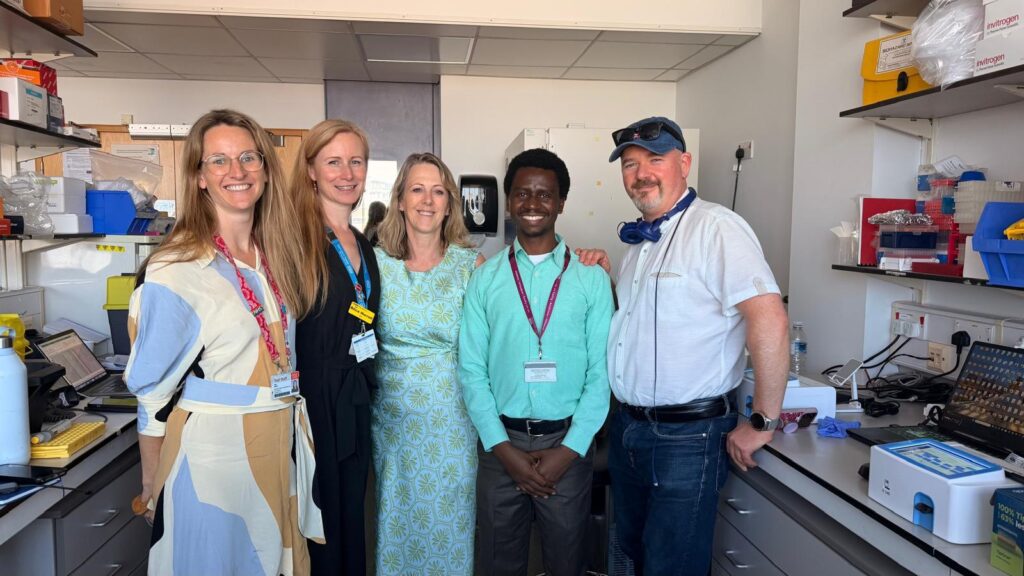 From the PAPAGAIO side, Professor Andrew Shennan, Dr Alice Hurrell, Dr Mukape Mukape, Dr Louisa Samuels and Jenie Sparkes, worked closely with the Lepzi team throughout the visit – a reminder that translating a laboratory concept into a test that works in a clinician’s hands takes exactly this kind of close, practical collaboration between researchers and industry.
If it succeeds, SPARK-PE could mean a woman anywhere, not just where there’s a fully equipped lab, could get a fast, accurate answer from a single drop of blood. That’s what industry-research partnerships like this one are ultimately working toward.