
 CRADLE B-SMART, a new programme aimed at reducing preventable maternal and neonatal deaths, launched on 13 March in Sierra Leone. The programme aims to strengthen care for women and their babies affected by hypertensive disorders of pregnancy, fetal growth restriction, anaemia, and haemorrhage. This will be achieved by enabling earlier engagement in antenatal care, improving risk identification, and supporting timely and appropriate decision-making. The programme will be implemented at Princess Christian Maternity Hospital, Rokupa Government Hospital, Aberdeen Women’s Centre, and nine peripheral health units across the Western Area Urban and Rural districts.
Currently, in Sierra Leone, most preventable maternal deaths result from haemorrhage, hypertension, or sepsis. Evidence from Sierra Leone has shown that the use of the CRADLE Vital Signs device is effective in supporting health workers to identify risks, ultimately reducing preventable maternal deaths. Also, showcased at the launch were other key components, including point-of-care diagnostics for anaemia, sickle cell disease, iron deficiency, creatinine levels, and pre-eclampsia biomarkers, as well as AI-enabled point-of-care ultrasound (AI-POCUS).
 The launch was attended by community partners, midwives, doctors, and policymakers. Professor Charles Sensie, Deputy Minister 1, opened the event and expressed his pleasure at the introduction of CRADLE B-SMART in Sierra Leone.
The day was chaired by Dr Joan H. Shepherd, President of the West African Postgraduate College of Nurses and Midwives and Head of the Department of Midwifery and Obstetric Nursing at the University of Sierra Leone. She shared her enthusiasm for using new technologies to help address the causes of preventable maternal deaths.
Sister Mariama Momoh highlighted how this research improves the quality of care for women and their babies. She noted that the CRADLE initiative in Sierra Leone demonstrates that when innovation, training, and collaboration come together, meaningful change is possible. She emphasised that the progress achieved so far should encourage continued efforts to strengthen maternal health systems and expand research, ensuring that every pregnant woman receives timely and life-saving care.
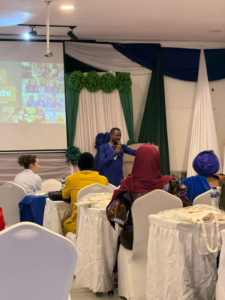 The afternoon included interactive sessions, during which attendees broke into facilitated groups. Each group focused on key areas, including community engagement (antenatal and postnatal), data collection and follow-up, recruitment strategies, stakeholder engagement, barriers and enablers to postnatal care, long-term blood pressure monitoring and cardiovascular risk, and procurement, equipment distribution, sustainability, and training.
Participants shared ideas, identified barriers, and developed practical solutions. These sessions proved insightful and valuable for all involved, fostering cross-collaboration among professionals from diverse backgrounds, including midwives, data collectors, doctors, and others.
The launch of CRADLE B-SMART marks an important step towards strengthening maternal healthcare in Sierra Leone. A key message from the event is that through technology and innovation, life-saving improvements in maternal health can be achieved in low-resource settings. Continued collaboration between health workers, researchers, and policymakers will be essential to ensure these advances translate into sustained improvements in outcomes for women and their babies.