
 Global Evidence on Mentorship
Two new studies from the 2YoungLives research team at King’s College London and Lifeline Nehemiah Projects set out global evidence on community-based mentoring for adolescent girls during pregnancy and after birth, and expose the structural barriers facing those living with disability in Sierra Leone.
Two papers published this week by the 2YoungLives research team, part of the wider CRIBS global health research group, make the case that supporting the world’s most vulnerable young mothers requires both sustained human relationships and serious structural reform.
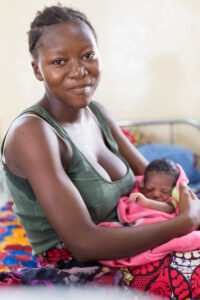
A global scoping review, published in the Journal of Global Health, shows that community-based mentoring can improve maternal and infant health, reduce repeat pregnancies, and support educational and economic stability for adolescent girls during pregnancy and after birth. Analysing evidence from diverse settings around the world, including the team’s own 2YoungLives trial published earlier in The Lancet, the review found that the most effective programmes position mentors as advocates, helping young mothers navigate complex health and social systems. Bringing together 13 studies conducted between 1991 and 2024 across more than 2,600 participants, it is among the first reviews to focus specifically on pregnant and parenting adolescents, a group routinely excluded from mentoring research.
 Mentors as Advocates
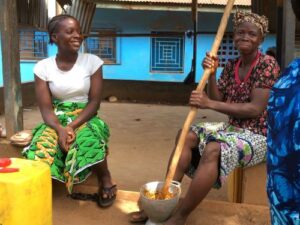
Dr Cristina Fernandez Turienzo, Senior Research Fellow at King’s College London and senior author, said, “Our review proves that a mentor is more than just a guide; they are a vital advocate who helps girls navigate systems that often feel closed to them. In diverse settings from North America to Sub-Saharan Africa, we see that a sustained, culturally sensitive relationship acts as a protective buffer against many of the health and social challenges these young women face. To truly support them, we must move beyond just clinical care and focus on building these human connections.”
 Structural Barriers in Sierra Leone
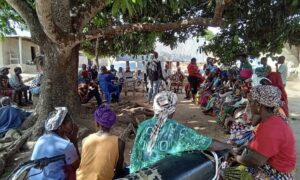
A linked qualitative study, published in BMJ Open and funded through the research capacity-building programme of the NIHR-funded CRIBS Global Health Research Group, explored the experiences of adolescent girls living with disability in Sierra Leone, and revealed a stark gap between policy and practice. Despite laws guaranteeing free healthcare, many girls still face informal fees and inaccessible facilities. The study also identified pervasive stigma and harmful myths, including the belief that intellectual disability can be transmitted through breast milk, which undermines girls’ autonomy and their babies’ nutrition. The absence of disability identifiers in many maternity records, the authors found, leaves these mothers effectively invisible within the health system.
Philemon Kamara, lead author of the qualitative study, commented, “The main barriers facing pregnant girls with disabilities are not their impairments, but stigma and inaccessible systems. True inclusion requires addressing these structural barriers by enforcing disability-inclusive policies, adapting infrastructure, and conducting community advocacy to dismantle the harmful myths that keep these mothers invisible.”
 Moving Beyond the Medical Model
Taken together, the two studies carry a single message: impairments do not disable these girls; environment and society create disability. Building inclusive mentoring schemes, the team argues, means moving beyond the medical model and advocating for structural reform, widening the legal definition of disability to include intellectual impairment, integrating disability data into health records, and providing inclusive training for health workers to dismantle the myths that compromise care for marginalised groups.
Professor Jane Sandall concluded, “Community-based mentoring interventions can change the life chances of adolescent girls and their babies in both high- and low-income countries by providing wrap-around support and advocacy to those who are stigmatised and ignored, working with local communities, health and education systems at a local level. They should also be included in future neighbourhood health plans in England.”
Implications for Global Health Policy
The findings highlight the urgent need for disability-inclusive policies, stronger advocacy, and integration of mentoring into health systems worldwide. They reinforce the principle that adolescent mothers need both human connection and structural reform to thrive.
About 2YoungLives and CRIBS Global
2YoungLives is a community-based mentoring scheme for vulnerable pregnant adolescent girls, developed and piloted by Lifeline Nehemiah Projects in Sierra Leone in 2017. A cluster-randomised controlled trial, published in The Lancet in 2025, found a 48% reduction in a composite of maternal and perinatal death in the intervention group.
CRIBS Global is driving a bold vision: to save mothers and babies through Capacity Research, Innovation and Building maternity Systems (CRIBS). Each project tackles a critical aspect of maternal health and includes a comprehensive strategy for impact.
Funding and Acknowledgements
The research was supported by the UK’s National Institute for Health and Care Research (NIHR), including the NIHR Global Health Research Group (NIHR133232), the CRADLE-B programme (NIHR207046) and a seed-funded capacity-building workstream.