
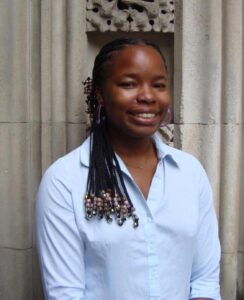
 This International Women’s Month, we spotlight Dr Chiamaka Elumogo, a doctor and researcher whose work in maternal health is driven by advocacy, representation, and a commitment to equity.
From an early passion for helping people, inspired by her mother’s career in clinical microbiology, Chiamaka pursued medicine with a clear vision: to blend science with activism. “I’ve always been more of a “scientific talker” than an essay write s entering the field of medicine that combined people skills with an ever-expanding depth and breadth of knowledge made most sense”, she commented. Her humour shines through when she said, “I did take a brief detour wanting to become a teacher, but this was cut short by the realisation that I would have to be around teenagers for the rest of my life!” Her journey into maternal health was shaped by the stark statistics on racial disparities in the UK, where Black women were reported to be five times more likely to die during pregnancy and childbirth than their white counterparts. Outraged by the lack of government action, she began working with the charity Five x More, contributing to campaigns that brought these issues to Parliament.
Activism at an early age
Her activism began at an early age, as she explains, “I was very much known as a troublemaking feminist in high school, so it was a natural progression to blend my passion for advocacy and activism about women’s issues with my clinical skills when I finished my medical degree”. This driver extends beyond maternal health. As an undergraduate, she helped lead an anti-public sexual harassment campaign with Our Streets Now, which contributed to the landmark Protection from Sex-based Harassment in Public Act in 2023.
Perspectives onBlack Maternal Health in the UK and globally
Chiamaka highlighted how “Black maternal healthcare in the UK is, unfortunately, going through a difficult time. Institutional racism has plagued the system for an unfathomably long time, and though conversations have been heading in the right direction, progress seems to be stagnating. The problem is well documented, and harrowing experiences of Black people throughout their pregnancies are blasted across the headlines about once a quarter nowadays- but what actions follow the trauma-mining and shock value? From a global standpoint, there is clear evidence of how racialised healthcare can be in the West: we see similar statistics reflected in the US, with stories echoing the experiences of those in the UK. Black women report pain being denied, not being listened to, and a general lack of empathy from healthcare providers. In monoracial low- and middle-income contexts, race isn’t an overt systemic factor, but has played a major part in the foundation of these countries’ health systems, crippled by historic oppression.
Representation at decision-making levels
Representation remains central to her mission. Speaking recently at the Black Maternal Health All Party Parliamentary Group in Westminster, she emphasised the need for diverse voices in research and leadership. “How can we expect patients and the public to feel listened to if there is no representation at decision-making level?” she asked, underscoring the urgency of inclusive structures in healthcare. At this meeting, many Black women and healthcare providers spoke about their own experiences either as patients or professionals, and how hearing the gut-wrenching stories of inadequate, insensitive, and at times disrespectful care was truly awful. Chiamaka took the opportunity to share an experience she had at a conference the previous year, where a nationally recognised organisation had no Black people selected to speak on any of their panels throughout the day.
Working with CRIBS Global
Today, Chiamaka’s work with CRIBS Global and the Papagaio team spans continents: from Zambia to Brazil — combining clinical research, data analysis, and community engagement. She highlights both the variety and the challenges of global maternal health research, noting the importance of weekly collaboration to keep track of the many fruit-named projects tackling hypertension and pregnancy complications. Chiamaka enjoys the variety this work brings: “There’s no such thing as a ‘normal day’ with this research group: when I’m not in meetings with international colleagues, I’m logged into the database to help clean participant data for studies and clinical trials. When the numbers and entries start to get a bit blurry, I switch to designing our monthly newsletter on Canva. Then some days I’m pipetting thawed blood samples in the lab on the 10th floor of St Thomas’ hospital. I’m so grateful to be developing such a broad range of skills and interests, constantly learning from people with many different academic and clinical backgrounds. I’m really enjoying the academic side of maternal health, though I do the occasional clinical shift to keep my skills up and remind myself how to talk to patients”.
The path ahead: having fun and doing good in the world.
Looking ahead, Chiamaka hopes to pursue speciality training in obstetrics and gynaecology, alongside a PhD exploring how global health strategies can inform UK maternal care for vulnerable communities. Her motto — “I want to have as much fun, and do as much good in the world as possible” — reflects her vibrant approach to life, whether through netball, pub quizzes, or international travel and collaborations.
She comments, “Community is at the centre of a lot of what I do, and I seem to end up on multiple side quests. The month I moved to London in 2024, I was invited to collaborate with NHS Blood and Transplant on a campaign to increase the number of blood donors of African and Caribbean heritage in South London, and was named a ‘Local Hero’ in the Brixton blood donor centre. I have also recently been invited to join the Reproductive Justice Initiative as a Trustee. I’m really looking forward to learning about the individual and systemic perspectives that impact people’s experience of family planning, and how this contrasts with my work in maternity care and research”.
Dr Chiamaka’s story is a powerful reminder that maternal health is not only about science and care but also about justice, representation, and the voices that shape the future.