
 At a gathering of women, community partners, midwives, doctors and government policymakers in Lusaka, Zambia, CRIBS Global launched CRADLE B (Community-based Research, Assessment for the Detection and management of hypertension after pregnancy for LifetimE Benefits). This programme aims to co-develop and evaluate a targeted, community-based postnatal intervention for women with hypertensive disorders of pregnancy (HDP), to facilitate earlier detection, improved hypertension management, prevention of hypertension onset and hypertension-mediated-organ-damage and improved subsequent pregnancy outcomes in Sierra Leone, Zambia and South Africa.
 This programme, which is led in Zambia by Professor Bellington Vwalika with Dr Kate Bramham as Co-Chief Investigators, is a new theme, building on the success of the proven CRADLE Vital Signs Alert device, ensuring frontline workers can measure blood pressure accurately and easily in community settings.
Acting Permanent Secretary, Technical Services at the Zambian Ministry of Health, Dr Matilda Kakungu Simpungwe, attended the event to launch Cradle B formally.
Professor Fastone Goma, Registrar of the Health Professions Council of Zambia (HPCZ), an Associate Professor of Physiology and Cardiovascular Health, and the Executive Director for the Centre for Primary Care Research (CPCR), Lusaka, outlined how in Africa, 130.2 million people suffer from hypertension and that this figure is expected to reach 216.8 million by 2030. He highlighted how pregnancy-induced hypertension (PIH) is widespread in low- and middle-income countries, poses significant peripartum risks, increasing maternal and neonatal morbidity in affected pregnancies. He also stressed how women with a history of PIH have an elevated lifetime risk of cardiovascular diseases like hypertension, stroke, and heart disease.
He concluded his talk by saying that improving outcomes for high-risk women remains an area for more research and is a race against a silent killer, requiring early diagnosis and effective management.
Dr Kate Bramham outlined how Hypertensive disorders of pregnancy are associated with subsequent risk of (a) chronic hypertension (CHT), (b) chronic kidney disease (CKD), and (c) premature cardiovascular disease (CVD), especially in women of African ancestry. She highlighted how hypertensive disorders of pregnancy affect 10% of pregnancies and how CVD is the leading cause of death in women worldwide and is rising in prevalence. She expressed how early postnatal care provides a unique opportunity to detect and manage CHT through evidence-based interventions, having the potential opportunity to ‘reset’ the cardiovascular risk, assess how access to new health technologies could change practice, finding new approaches to study ‘early’ rather than established disease.
Some of the questions framing this research are:
- How do we get the interventions to women in the right place at the right time?
- Where and how do women with new babies want to access and reach care?
- How do we work across disciplines to incorporate these solutions within a wider sociological, political and economic context that promotes future health of women?
- How do we enable women’s rights and move away from a reactive to a proactive and preventative approach?
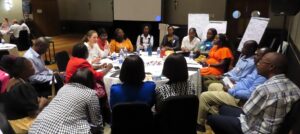 Dr Katy Kuhrt and Dr Alice Beardmore-Gray outlined the processes of the programme, which aims to establish community partnerships and mapping to inform the design and delivery of a community-based intervention. They shared how they aim to map out the geographical makeup of the community, including services such as schools, clinics and pharmacies, seeking to understand the social structures and how the community is governed, how people access primary health care facilities, and to map out cultural and social assets within communities that cannot be physically mapped.
 Secondly, they will set up community engagement meetings to explore knowledge and beliefs around post-partum hypertension in order to document key beliefs/ knowledge/ understanding of HDP, postnatal care, what is missing and who is involved.
Thirdly, they will host focus group discussions to explore barriers and facilitators to the development and delivery of postnatal care pathways, including point-of-care testing, for women with previous HDP.
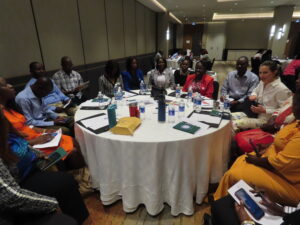 Finally, the programme includes a Theory of Change Workshop to inform intervention co-development, programme theory and implementation strategy. This requires the input and engagement of all of women with lived experience, their partners, community leaders, midwives, doctors and researchers. This part of the programme kicked off on the day of the launch, where the facilitators highlighted that they wanted to learn from local experts. It included participants completing a Problem Tree, where they could highlight where problems in postnatal care occur, and then look at possible mechanisms of change and solutions to address the challenges, exploring how technology might help or hinder these processes.
The launch of CRADLE B represents a bold step towards healthier futures for mothers and families across Africa, ensuring culturally relevant interventions. The collaborative nature of the approach ensures that the solutions are grounded in local realities and will empower women to access care proactively.