
 The CRIBS Global team recently convened in Zambia to launch CRADLE SMART (Community empoweRment Approaches to Develop Local, Early Sustainable MAteRnity care with co-developed Technology), an FCDO-funded programme designed to strengthen early, community-centred maternal and perinatal care.
The programme is led in Zambia by Professor Bellington Vwalika as Principal Investigator, with Professor Andrew Shennan and Dr Kate Bramham as Chief Investigators, reflecting strong local leadership alongside long-standing international collaboration.
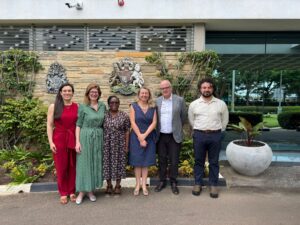
Members of CRIBS Global visited the British High Commission in Lusaka, Zambia on Tuesday 3 February and met with Dr Sarah Goldsmith, Regional Health Adviser, Africa Programmes and Expertise Department (APEX) to discuss the work of CRADLE SMART, which the FCDO is funding
CRADLE SMART focuses on two of the most important and preventable drivers of maternal and perinatal morbidity and mortality in sub-Saharan Africa: pre-eclampsia and anaemia. When undetected or poorly managed, both conditions contribute directly to severe complications including obstetric haemorrhage, acute and chronic kidney injury, stillbirth, preterm birth, and maternal and neonatal morbidity and mortality. Although these conditions are common, detectable, and treatable, many women continue to present late, often only when complications are advanced and options for prevention are limited.
At its core, CRADLE SMART is about making the first contact in pregnancy count. The programme aims to support high-quality, respectful maternal care from the outset, ensuring women are listened to, assessed comprehensively, and offered timely, appropriate care pathways. By shifting risk identification earlier in pregnancy and closer to communities, CRADLE SMART seeks to move care from late, reactive intervention to early, preventative action.
The programme builds on the proven impact of the CRADLE blood pressure device, a simple innovation that demonstrated how context-appropriate technology can transform care at scale. In Sierra Leone, where many facilities previously lacked functioning blood pressure devices, national scale-up of CRADLE helped change care trajectories for women at risk. More recently, shock index, derived from blood pressure and pulse, has been incorporated into the World Health Organization definition of postpartum haemorrhage, further strengthening the role of CRADLE-enabled vital signs in early detection and escalation of life-threatening bleeding.
Alongside clinical innovation, CRADLE SMART places strong emphasis on sustainability and policy integration. The programme is designed to generate evidence that informs national guidelines and routine care pathways and will host Policy Labs in Zambia and Sierra Leone to support translation of findings into policy, practice, and scale-up beyond the life of the programme.
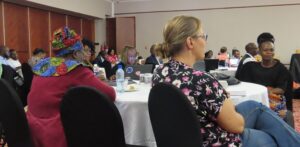
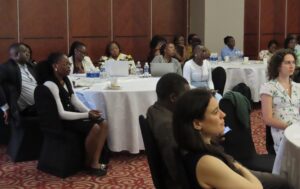
The CRADLE SMART programme of work
CRADLE SMART brings together a set of interlinked workstreams spanning community engagement, early pregnancy screening, acute triage, and digital decision support. Together, these workstreams aim to deliver the right care, in the right place, at the right time, while strengthening health systems rather than creating parallel ones.
Workstream 1: Co-development of tools for quality, respectful maternal care
Workstream 1 focuses on co-developing and adapting point-of-care and digital tools that support accurate assessment, good clinical decision-making, and respectful care in low-resource settings. Specifically, these tools are designed to:
- identify women who are anaemic,and critically, understand why they are anaemic
- identify women at high risk of pre-eclampsiaearly in pregnancy
- provide women with an accurate gestational age and estimated due dateusing AI-enabled point-of-care ultrasound (AI-POCUS)
The emphasis is on usability, trust, and integration into routine antenatal workflows, ensuring that technology enhances, rather than disrupts, compassionate care and meaningful interactions with women.
Workstream 2: Community sensitisation and outreach
This workstream aims to understand and address barriers to early antenatal care attendance. Through community engagement and co-designed outreach strategies, CRADLE SMART seeks to encourage women to attend care early in pregnancy, enabling timely screening, prevention, and ongoing support. Community partnerships are central to building trust, acceptability, and sustainability.
Workstream 3: SCREEN SMART – early pregnancy screening using point-of-care tools
SCREEN SMART focuses on improving early risk identification using point-of-care diagnostics delivered close to where women live.
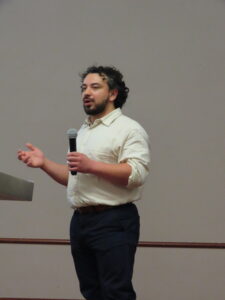 GUAVA – *G*enomics, *U*ltrasound and *A*ngiogenic biomarkers for early risk *V*ulnerability of pre-eclampsia in *A*frican populations aims to develop an LMIC-appropriate approach to screening for preterm pre-eclampsia, using a bundle of point-of-care assessments including accurate blood pressure measurement, early pregnancy dating with AI-POCUS, and point-of-care blood tests such as placental growth factor (PlGF). These tools are currently being evaluated individually and in combination, with the longer-term aim of integrating them into a unified, scalable risk assessment approach.
GUAVA study will also be the first genomic biobank in Zambia and one of the first prospective genomic biobanks in SSA for pregnancy complications, ensuring the inclusion of women of African ancestry in discovery research about the causes and future treatments that are targeted and inclusive of women living in Zambia
OKRA – Optimising early pregnancy anaemia through Knowledge, Root-cause assessment, and Actionfocuses on early identification and management of anaemia. Using point-of-care haemoglobin testing and targeted root-cause assessment, OKRA aims to develop and evaluate an early pregnancy clinical pathway that improves haemoglobin concentration at 28–32 weeks’ gestation, reducing vulnerability later in pregnancy and at delivery.
Evidence generated through SCREEN SMART will inform the development of digital decision support embedded within the CRADLE SMART-MAMA app, supporting interpretation of point-of-care results and guiding consistent, appropriate management once combined pathways are ready for implementation.
Workstream 4: ACT SMART – early action and triage for complications
ACT SMART focuses on supporting frontline providers to recognise and respond to complications early, using point-of-care diagnostics and clear escalation pathways.
CRADLE-ACE evaluates the feasibility and utility of community-based placental growth factor (PlGF) testingand associated point of care tests for women presenting with hypertension, supporting earlier identification of those at risk of severe pre-eclampsia complications.
CRADLE PIKIN assesses the feasibility and clinical utility of AI-enabled point-of-care ultrasound for gestational age confirmation and fetal growth assessment in hypertensive pregnancies, where accurate dating and growth trajectories are critical for timing surveillance and delivery.
CRADLE-SAVE focuses on Shock-Index Assessment using Vital signs for Escalation, prospectively validating the new WHO postpartum haemorrhage diagnostic criteria using a novel CRADLE device with quantitative shock index measurement, and supporting earlier recognition and escalation of bleeding.
CRADLE-P aims to develop a pathway to prevent, identify, and manage pregnancy-associated acute kidney injury, using point-of-care creatinine testing and structured referral pathways for women identified as high risk.
Together, CRADLE SMART represents a shift from late, reactive care to early, integrated, and woman-centred care. By combining community engagement, point-of-care diagnostics, AI-enabled ultrasound, digital decision support, and policy-focused implementation, the programme aims to reduce preventable maternal and perinatal morbidity and mortality, strengthen routine antenatal care, and support sustainable health system change in Zambia and beyond.