
Three days of celebration, collaboration, and planning began this week as CRIBS Global welcomed midwives, doctors and researchers from across its global partnership to London for the inaugural CRIBS Global Conference, hosted at King’s College London.
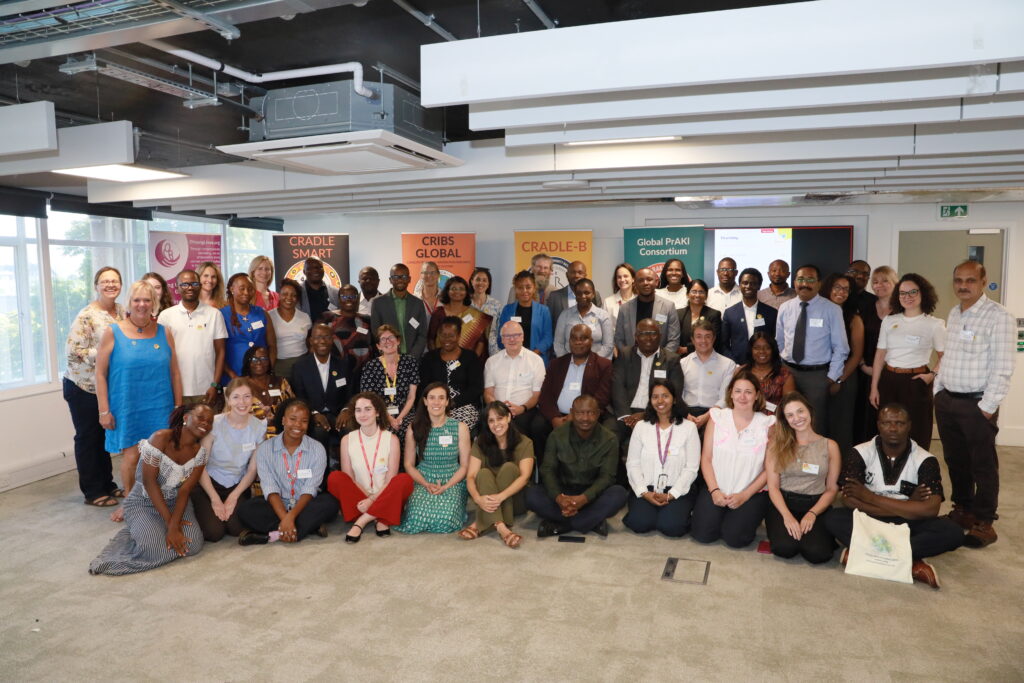
Delegates travelled from Sierra Leone, Zambia, Tanzania, Uganda, South Africa, Brazil, and India to join colleagues from the UK, marking a rare and valuable opportunity for the whole CRIBS Global family to come together in person.
A Time to Act
Opening the conference, Professor Andrew Shennan welcomed everyone and spoke candidly about the widening inequalities in global maternal mortality, framing the gathering as a timely call to action. He outlined his hopes for the three days ahead: a chance for the group to:
– Reflect on and celebrate past achievements
– Share their work with the wider group
– Manage current projects
– Plan future work
– Network and explore new opportunities
– Cement existing relationships and build new ones
– Showcase progress to funders, colleagues, and universities
– Actively contribute and learn from one another’s experience
– Feel good, have fun, and enjoy London
Thirty Years in the Making

Professor Shennan traced CRIBS Global’s roots back to the CRADLE studies that followed: work grounded in three decades of blood pressure device validation and innovation. What began as a niche focus on accurately measuring blood pressure has grown into a programme dedicated to capacity building, research, innovation, and translating that evidence into real change within maternity systems worldwide, thus the CRIBS acronym.
Since 2008, the group’s hypertension and global maternal health programmes have produced 110 published papers, including 11 high-impact publications in The Lancet. Just as central to the CRADLE story, though, are the people behind it: CRIBS Global’s commitment to capacity building has helped train 22 doctoral and higher-degree researchers, many of whom have gone on to become leaders training the next generation in Zambia and Sierra Leone.
The programme’s reach extends across the parts of the world where this work matters most: Brazil, Egypt, Ethiopia, Haiti, India, Kenya, Mozambique, Pakistan, South Africa, Malawi, Mali, Nigeria, Sierra Leone, Tanzania, Uganda, Zambia, and Zimbabwe.
Building on Strong Foundations
 Professor Kate Bramham then took to the floor to outline the foundations of CRIBS Global, introducing the audience to the CRADLE Fruit family of studies: Peaches, Pears, Apricot, Pineapple, and Orchard: which together span point-of-care testing, PlGF, and acute kidney injury research. She thanked every delegate in the room for the part they play in the programme’s success, reminding everyone that none of this work would be possible without genuine team effort.
Three Days ahead of learning from each other, planning future work and showcasing the work we do

With opening remarks setting the tone, delegates now move into three days of sessions, presentations, and networking, before returning home re-energised and re-connected to progress this vital work in maternal and newborn health across their own countries and communities.