
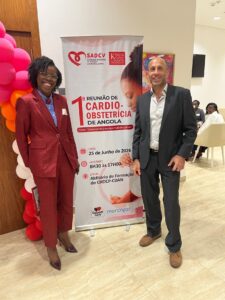
On 25 June 2025, Angola made history by hosting its first national conference dedicated to heart disease in pregnancy, organised by CRIBS Global’s Dr David Cohen and Dr Antonio de Marvao in partnership with King’s College London and Dr Gloria Mawete, President of the Angolan Society of Cardiovascular Diseases. The event brought together more than 150 clinicians, patients and advocates in a shared commitment to saving the lives of mothers with complex cardiac conditions.
Maternal cardiovascular disease is one of the leading causes of death among pregnant women worldwide, and Angola, like many sub-Saharan African countries, faces a particular burden. Women with conditions such as cardiomyopathy, valvular heart disease, congenital heart disease and pre-eclampsia-related cardiovascular complications require highly specialised, multidisciplinary care that is rarely available at scale in low- and middle-income settings.
The conference, held at Angola’s leading cardiothoracic centre, the Hospital Complex for Cardiopulmonary Diseases, Cardeal Dom Alexandre do Nascimento (known locally as the “Cardeal”), brought these challenges to the forefront of national clinical dialogue for the very first time.
A National Gathering
 More than 100 delegates attended in person, with over 50 joining online from across Angola. The room brought together a genuinely multidisciplinary audience: cardiologists, obstetricians, physicians, intensivists, nurses, midwives and students, alongside the Cardeal’s Director General, Dr Mario Fernandes, and directors of the major maternity hospitals in Luanda.
Expert presentations covered the cardiac conditions most commonly encountered during pregnancy in Angola, including cardiomyopathy, valvular heart disease, mechanical heart valves, congenital heart disease and the long-term cardiovascular consequences of pre-eclampsia. The sessions were carefully designed to be clinically grounded and practically relevant, highlighting both the growing burden of maternal cardiovascular disease and the concrete opportunities to improve outcomes through earlier diagnosis.
Hearing from Patients
 One of the most powerful moments of the day came not from a clinician, but from the women themselves. Patients who had experienced heart disease during pregnancy shared their stories directly with delegates, a reminder, both moving and urgent, of the human stakes behind every clinical protocol.
Their accounts reinforced a central message of the conference: that earlier recognition and coordinated, multidisciplinary care are not aspirational goals but clinical necessities. For many of these women, timely intervention is the difference between life and death.
Building a Pregnancy Heart Team

 The conference concluded with an energetic round-table discussion exploring how a Pregnancy Heart Team, a dedicated multidisciplinary group bringing together obstetricians, cardiologists, anaesthetists, intensivists and other specialists, could be developed within the realities of the Angolan healthcare system.
Challenges were acknowledged honestly. But the energy in the room was unmistakably forward-looking. Delegates overwhelmingly supported making the conference a regular event, and there was broad agreement that stronger collaboration between specialties will be key to improving care for women with complex cardiac disease during pregnancy.
The Beginning of Something Lasting
 For CRIBS Global, this conference represents far more than a successful event. It marks the beginning of new partnerships, new conversations, and – we hope – lasting improvements in the care of women with heart disease in pregnancy across Angola.
Organised by Dr David Cohen, a CRIBS Global researcher with deep expertise in maternal cardiovascular medicine, the conference is a striking demonstration of CRIBS Global’s global reach: translating world-leading research into real-world impact, in the countries and communities that need it most.
Angola is now part of a growing international network of clinicians committed to improving outcomes for the most vulnerable pregnant women. That is what CRIBS Global exists to do.