
She was just a teenager when she first knew fear, shame, and the sharp edge of a system that often turns its back on young mothers. Mangenda Kamara’s story begins in Sierra Leone, a country where adolescent pregnancy carries an outsized risk, and where one in ten pregnant teens in parts of Freetown was found to die in childbirth or during pregnancy. 2YoungLives, the programme she co-founded, is now rewriting what it means to be young and pregnant in a place where many would say there’s little chance of surviving, let alone thriving.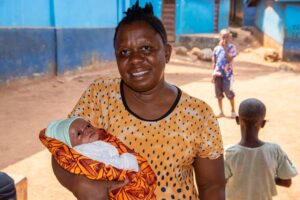
Mangenda, a gender-studies specialist with deep roots in both research and lived experience, co-founded 2YoungLives in 2017. The aim: to close the gap between survival and despair for pregnant girls. The tool was simple in idea, profound in impact: local mentors, known for their kindness and trustworthiness, to walk side by side with adolescent mothers. To guide them not just through pregnancy and childbirth — to safe delivery — but through the return to school, or learning a trade, rebuilding family connections, and caring for their babies with dignity.
When Lives Begin to Change
When 2YoungLives first piloted in Kuntorloh, the data was already stark. A 2015 survey there showed that teenage mothers were dying at rates that scholars find hard to believe. Mangenda and her partners decided that such risk was not inevitable. With some small grants, much courage, and a lot of community buy-in, they grew from three mentors to 24 over a few years; from one neighbourhood to multiple districts. The mentees would receive help to attend antenatal clinics, give birth in health facilities, receive adequate nutrition and rest needed, and be supported when it matters most.
The results are now gaining international attention. In the early phase (2017-2021), among the 343 teenage mothers who were mentored, there were no maternal deaths. When the programme was expanded into a formal pilot cluster-randomised trial involving 673 girls across rural and urban sites, those who were part of 2YoungLives had a significantly lower rate of maternal/perinatal deaths (about 6%) compared to girls receiving only standard care (about 13%) Amongst the mentored girls, no girls died, and the risk for babies was almost halved. For every 18 adolescent mothers supported by the programme, one maternal or perinatal death is prevented.
Wider Impact
Beyond the numbers, there are powerful stories which reflect that the programme is not just about individuals but also has an encouraging wider impact. This is reflected in communities where there has been a wholesale attitude change to those gendered issues which perpetuate inequity and keep girls from achieving their potential. On an individual level, girls have returned to school and have gained vocational skills such as plumbing, tailoring, or electronics. Mothers have formed friendships, mentors have become lifelines and small businesses have been started, enabling girls to eat, save and care for their children without depending entirely on others.
The Woman Behind the Mission
Mangenda’s own path has not been easy. Her academic credentials — an MA, an MPhil, and a recent PhD — are set against a backdrop of personal loss and systemic neglect. Her PhD work includes a “photovoice” project where pregnant girls used their own or those borrowed from family and friends to create images that tell the story of what it feels like to be a young mother in Sierra Leone; what the challenges are, and what hope looks like. Mangenda’s focus is not just on changing policy but on changing lives, in dignity and in possibilities.
With a team from grassroots NGO Lifeline Nehemiah Projects, she ran 2YoungLives as a volunteer in its early years, working with very limited resources. But slowly, with partnerships (King’s College London, Sierra Leone Ministry of Health,), research grants, and a growing base of evidence, the programme has been scaled up.
Mangenda comments, “I walked into my PhD journey carrying the weight of past struggles, fear born out of the voices and experiences that once tried to limit me during my degree and master’s. But with the unwavering support of my supervisors, Mohamed Gibril Sesay, Critina Fernandez Torenzo, Jane Sadell, and Lucy November, I found a new story. A story not of fear, but of courage, transformation, and triumph, a reminder that with the right guidance, every painful past can give way to a future of purpose and fulfilment.
Since 2017, I have walked alongside adolescent pregnant and mothering girls, as well as women in small groups, and each step has deepened my sense of purpose. I feel truly fulfilled when I see adolescents rise above their circumstances and reach for their goals, despite the challenges life has placed before them. I have also witnessed the silent struggles of women navigating marriages and striving to guide their children in the right path and it has become my passion to mentor, support, and advise them as they shape stronger futures for themselves and their families.”
Why It Matters — And What’s Next
Sierra Leone had one of the highest maternal mortality ratios (MMR) in the world – 354 deaths per 100,000 live births in 2023. While this represents a significant improvement for the country, the rate is still substantially higher than the global average, which was 197 deaths per 100,000 live births in the same year [1,2]. The regional disparities remain stark; Sub-Saharan Africa, where Sierra Leone is located, continues to have the highest MMR at 454 deaths per 100,000 live births and accounts for approximately 70% of all global maternal deaths in 2023.
Teenage mothers are among the most vulnerable: stigmatised, abandoned by family, unable to access care, or plagued by malnutrition and unsafe births. 2YoungLives addresses not just clinical care but the social determinants — stigma, poverty, disconnection — that sustain risk.
The pilot trial published in The Lancet (2025) shows feasibility and impact. It provides a model of community-based mentoring that is locally designed, culturally appropriate, and effective.
Now, the challenge is scaling: getting more funding, recruiting and training more mentors, expanding into more communities (especially rural), ensuring that government policies to support returning to school are enacted, safe maternity and reproductive health. Also, making sure that the programme’s personal stories — of loss, of courage, of recovery, of resilience — are heard, to humanize the numbers.
A Salute to Courage and Vision
Mangenda Kamara stands at the intersection of trauma and transformation, having excelled in her hard work, loving service to young women and academic striving for success – including many sleepless nights in pursuit of excellence. From surviving what many young mothers never do, to building a programme that gives others a chance not just to survive but to thrive, she has made choices that turned personal pain into public good. Her recent co-authored Lancet Journal article and her newly minted PhD aren’t merely academic credentials — they’re part of her arsenal for change. The Lancet article is not just scientific recognition — it’s evidence saving lives.
In Sierra Leone, where young girls used to think childbirth was a death sentence, 2YoungLives now offers the promise of a different future. For every adolescent who walks through that mentoring process, for every small business begun, every school uniform bought, every young mother reconciled with family, every baby born into safer hands — that’s Mangenda’s legacy being built in real time.
Let us celebrate Mangenda Kamara. Not just for what she has achieved, but for what she has imagined — and made possible.